If you live in Katy, you already know the pattern. A summer squall rolls through, or a winter freeze settles in, and the grid goes down. During Hurricane Harvey and the 2021 winter storm, many homes here lost power for days — not hours. The difference between an inconvenience and a genuine emergency usually comes down to how well you prepared before the lights went out.
Before the storm season starts
Most of this takes one afternoon, and none of it requires an electrician.
- Charge everything. Keep phones, tablets, and battery banks topped up when severe weather is forecast. A car charger or small power station covers you for days.
- Stock the basics. Flashlights with fresh batteries, a battery or hand-crank radio, bottled water, shelf-stable food, and a manual can opener. Avoid candles — open flames are the leading cause of house fires during outages.
- Protect your electronics. Whole-home surge protection or quality point-of-use surge strips protect TVs, computers, and appliances from the spike that often accompanies a restoration.
- Know your medical needs. If anyone in the home depends on powered equipment, register with your utility as a medical-needs customer and have a battery plan in writing.
- Fill the freezer. A full freezer stays cold far longer than an empty one. Grouping food together also helps.
When the power actually goes out
Disconnect. Unplug sensitive electronics and major appliances to avoid damage when power returns. Leave one light switched on so you know the moment it comes back.
Keep the refrigerator and freezer closed as much as possible. A closed refrigerator holds a safe temperature for about four hours; a full freezer holds for roughly 48. Food that has stayed above 40°F for more than two hours should be discarded — when in doubt, throw it out.
Never run a portable generator indoors, in a garage, or under a carport. Carbon monoxide kills silently and quickly. Generators belong outside, well away from windows, doors, and vents. And never back-feed a generator into a household outlet or dryer plug — that is the single most dangerous mistake a homeowner can make, because it can energize lines utility crews believe are dead.
The upgrade that ends the scramble
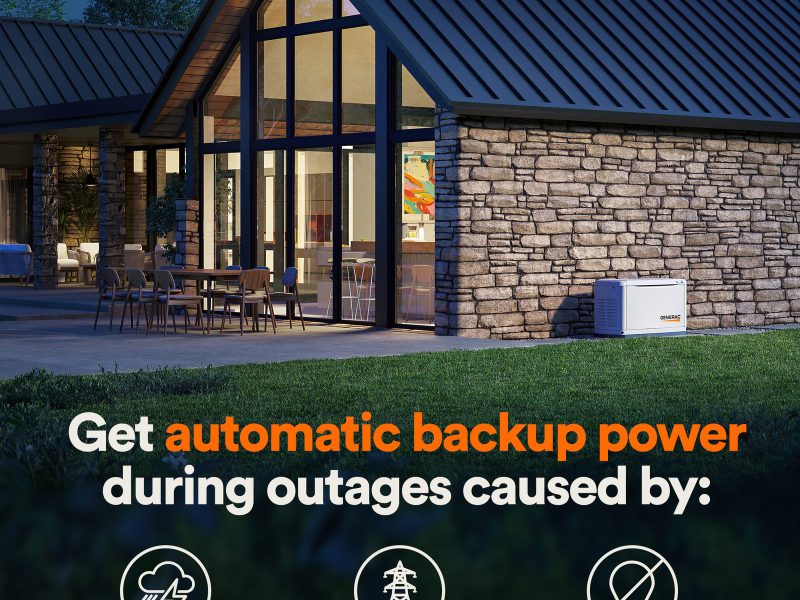
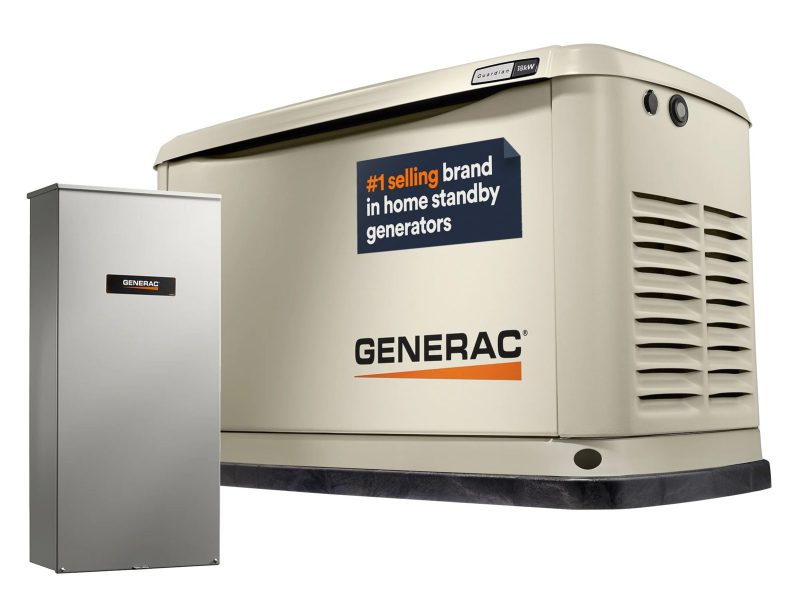
Preparedness is smart, but there is a limit to how comfortable a flashlight and a cooler can make a multi-day outage. A whole-home standby generator changes the equation entirely. It sits outside on its own pad, runs on your natural gas or propane supply, and senses an outage on its own. Within seconds it starts, transfers your home over through an automatic transfer switch, and keeps the lights, refrigerator, Wi-Fi, and air conditioning running as if nothing happened.
Unlike a portable unit, there is nothing to wheel out, no fuel to stabilize, and no cords to run. It is permanently installed, permitted, and inspected — which is exactly why it has to be sized correctly by a licensed electrician.
Your outage checklist, summarized
- Charge devices and stock flashlights, water, and food before the season.
- Add surge protection and register medical needs in advance.
- During an outage: unplug electronics, keep the fridge closed, and keep generators outside.
- Plan a permanent solution if outages are frequent or medical equipment depends on power.
If you are tired of treating every storm like a fire drill, we can size a standby system for your home in a single free assessment. Call or text (713) 900-9140 or send the quote form on this page.
Need a licensed electrician in Katy?
Free quotes, honest pricing, and a local team that answers the phone. Call, text, or send the form and we will reply fast.